Dan Klaasse, M.S., LLPC
About Dan
The person you'll be talking to
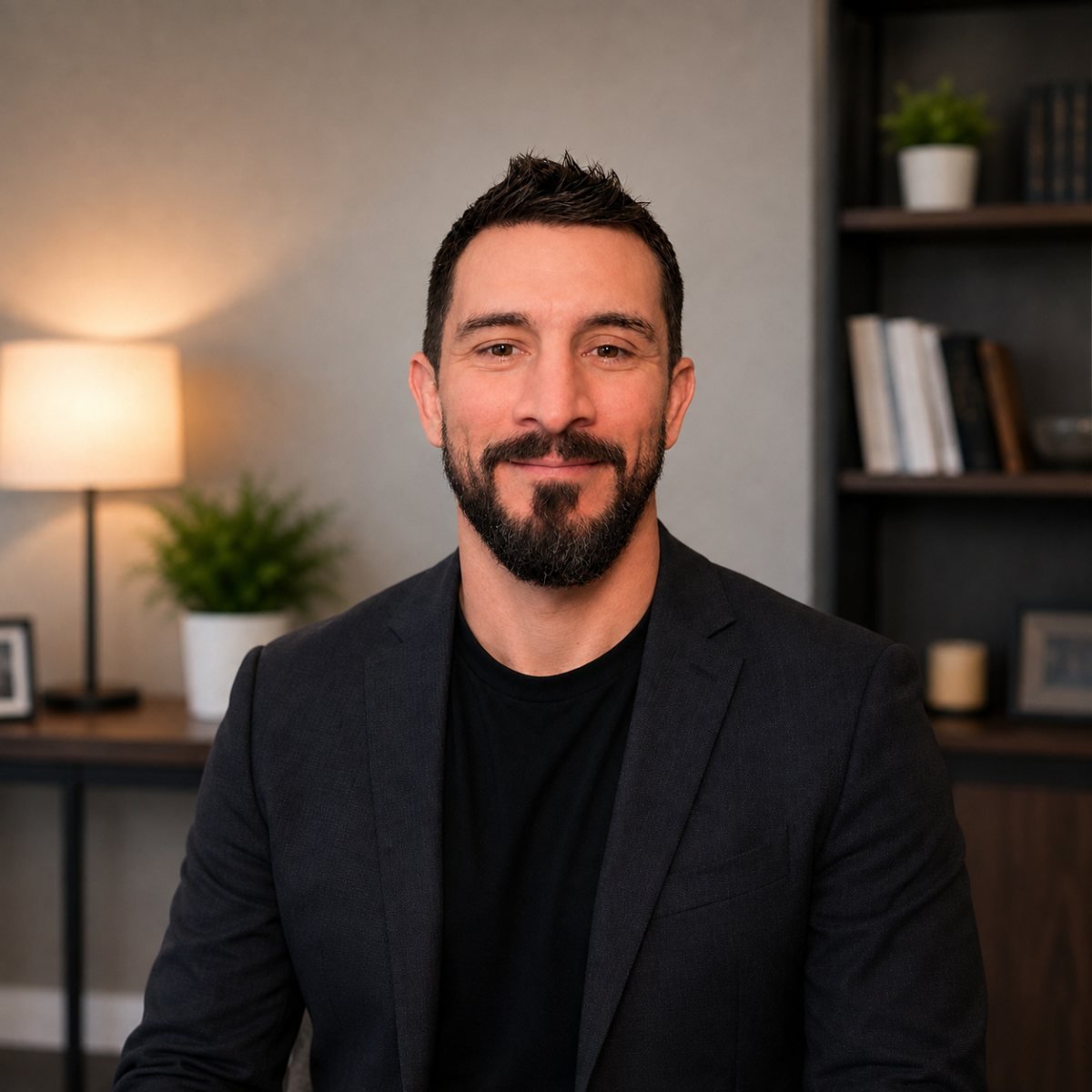
Dan is a combat veteran and a former Marine Corps Scout Sniper. He is a Limited Licensed Professional Counselor and a father, and he has faced loss and upheaval himself. His approach comes from training and from lived experience, and it is built for people who are used to carrying things quietly.
How Dan Works
Sessions are direct and practical. You do not need a diagnosis, a rehearsed explanation, or a plan before you arrive. The work starts with what is affecting you now and moves at a pace you set.
Experience that came before the training
Dan has spent years watching how trauma and stress actually behave. Not how they are described in a textbook, but how they show up in the field and in the counseling room.
In service, he saw what sustained alertness does to a person over time. The ability to stay switched on, read a situation in seconds, and act without hesitating is not a flaw. It is trained, and it keeps people alive. He also saw what happens when that system stays on after the situation has passed, and what it costs at home, in sleep, and in the people closest to you.
In the counseling room, he kept meeting the same pattern in people who had never worn a uniform. The nurse who cannot stop scanning a room. The officer who will not sit with his back to a door. The parent who has reacted before they have decided to. Different lives, the same machinery.
That is where the Cognitive Edge came from.
The approach starts from a premise that is not always obvious: the responses causing you the most trouble are usually working exactly as designed. Hypervigilance is attention doing its job. Anger often arrives faster than fear because it is the more useful of the two under threat. Numbness is a way of continuing when feeling all of it would stop you. These are not malfunctions. They are capabilities running at the wrong time, in the wrong place, at a volume you did not choose.
That distinction matters. The usual framing asks you to treat yourself as broken and hand the problem to someone else to fix. For people trained to be capable under pressure, that framing rarely lands. It is also not accurate.
So the work is not about dulling the edge. It is about the switch.
Counseling with Dan tends to focus on three things. Recognizing a response early, while there is still room to do something other than ride it out. Understanding what is actually setting it off, which is often not the thing that appears to have set it off. And building the ability to decide whether it runs at all.
None of that requires a diagnosis, a full account of your history, or language you have not found yet. You can start with the part that is affecting you this week. The rest tends to come into view on its own, at a pace you set.
What you are left with is not a quieter version of yourself. It is the same instincts, under your control rather than in charge.
In service, he saw what sustained alertness does to a person over time. The ability to stay switched on, read a situation in seconds, and act without hesitating is not a flaw. It is trained, and it keeps people alive. He also saw what happens when that system stays on after the situation has passed, and what it costs at home, in sleep, and in the people closest to you.
In the counseling room, he kept meeting the same pattern in people who had never worn a uniform. The nurse who cannot stop scanning a room. The officer who will not sit with his back to a door. The parent who has reacted before they have decided to. Different lives, the same machinery.
That is where the Cognitive Edge came from.
The approach starts from a premise that is not always obvious: the responses causing you the most trouble are usually working exactly as designed. Hypervigilance is attention doing its job. Anger often arrives faster than fear because it is the more useful of the two under threat. Numbness is a way of continuing when feeling all of it would stop you. These are not malfunctions. They are capabilities running at the wrong time, in the wrong place, at a volume you did not choose.
That distinction matters. The usual framing asks you to treat yourself as broken and hand the problem to someone else to fix. For people trained to be capable under pressure, that framing rarely lands. It is also not accurate.
So the work is not about dulling the edge. It is about the switch.
Counseling with Dan tends to focus on three things. Recognizing a response early, while there is still room to do something other than ride it out. Understanding what is actually setting it off, which is often not the thing that appears to have set it off. And building the ability to decide whether it runs at all.
None of that requires a diagnosis, a full account of your history, or language you have not found yet. You can start with the part that is affecting you this week. The rest tends to come into view on its own, at a pace you set.
What you are left with is not a quieter version of yourself. It is the same instincts, under your control rather than in charge.
Start a conversation
You do not need to have everything figured out before reaching out. Share a little about what you are experiencing, and we will help you understand the next step.

Frequently Asked
Questions people ask before reaching out
Finding the right mental health provider is an important decision. Here are answers to some of the questions people commonly have before reaching out.
No. You do not need a PTSD diagnosis, or any diagnosis at all, to benefit from therapy or psychiatric support. Many people reach out because they feel overwhelmed, disconnected, irritable, unable to sleep, or simply unlike themselves.
We work with veterans, active-duty service members, military families, first responders, healthcare professionals, and civilians experiencing trauma, stress, anxiety, depression, sleep difficulties, anger, or major life transitions.
Cognitive Edge Counseling primarily serves private-pay clients. Contact the practice to discuss current rates, payment options, and whether documentation can be provided for possible out-of-network reimbursement.
The first appointment is an opportunity to discuss what you have been experiencing, what you would like to improve, and whether the practice is the right fit for your needs. You will also have time to ask questions about treatment options and next steps.
Yes. Your privacy is taken seriously, and your information is handled in accordance with applicable professional and legal requirements. There are limited exceptions when disclosure may be legally required, which will be reviewed with you as part of the informed-consent process.
Our Location
Visit us at the middle of the mitten
Alma
524 Liberty Street
Alma, MI 48801